


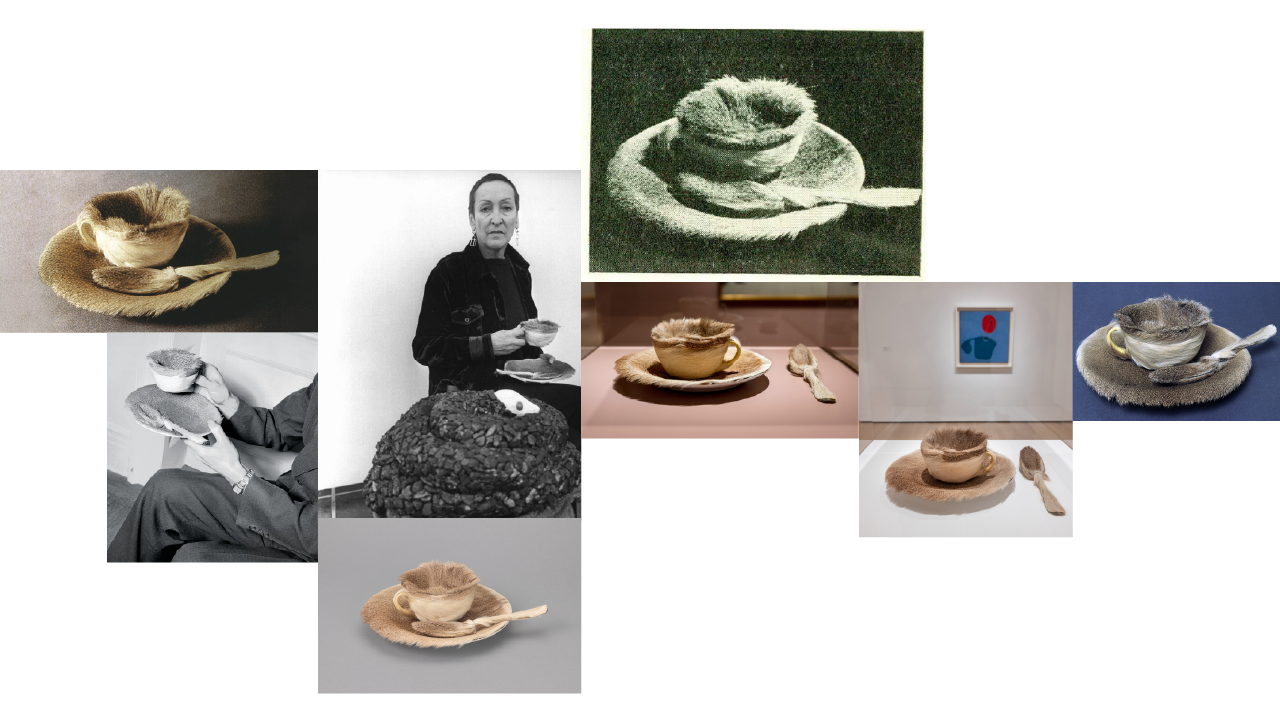
Archival photos of Meret Oppenheim's 'Object' (1936). Full image credits listed at the bottom of this post.
In 1936, Méret Oppenheim created Object, a tea set covered in animal fur. This Surrealist piece completely flipped the original purpose of these everyday items, turning functional objects into art meant only to be looked at from a distance. After all, nobody really wants to drink tea from a furry cup.
Art is always open to interpretation, and a great piece naturally sparks the viewer's imagination. But when the artist's original intent gets twisted—and that twist becomes the mainstream view—can the artist ever truly reclaim their own narrative?
At the time, the male-dominated Surrealist circle quickly linked Object to sexual double meanings. They even changed her objective title, Cup, saucer and spoon covered with fur, to The Luncheon in Fur. This was a direct, provocative nod to Édouard Manet’s famous painting, The Luncheon on the Grass, which depicts two fully clothed men picnicking with a nude woman.
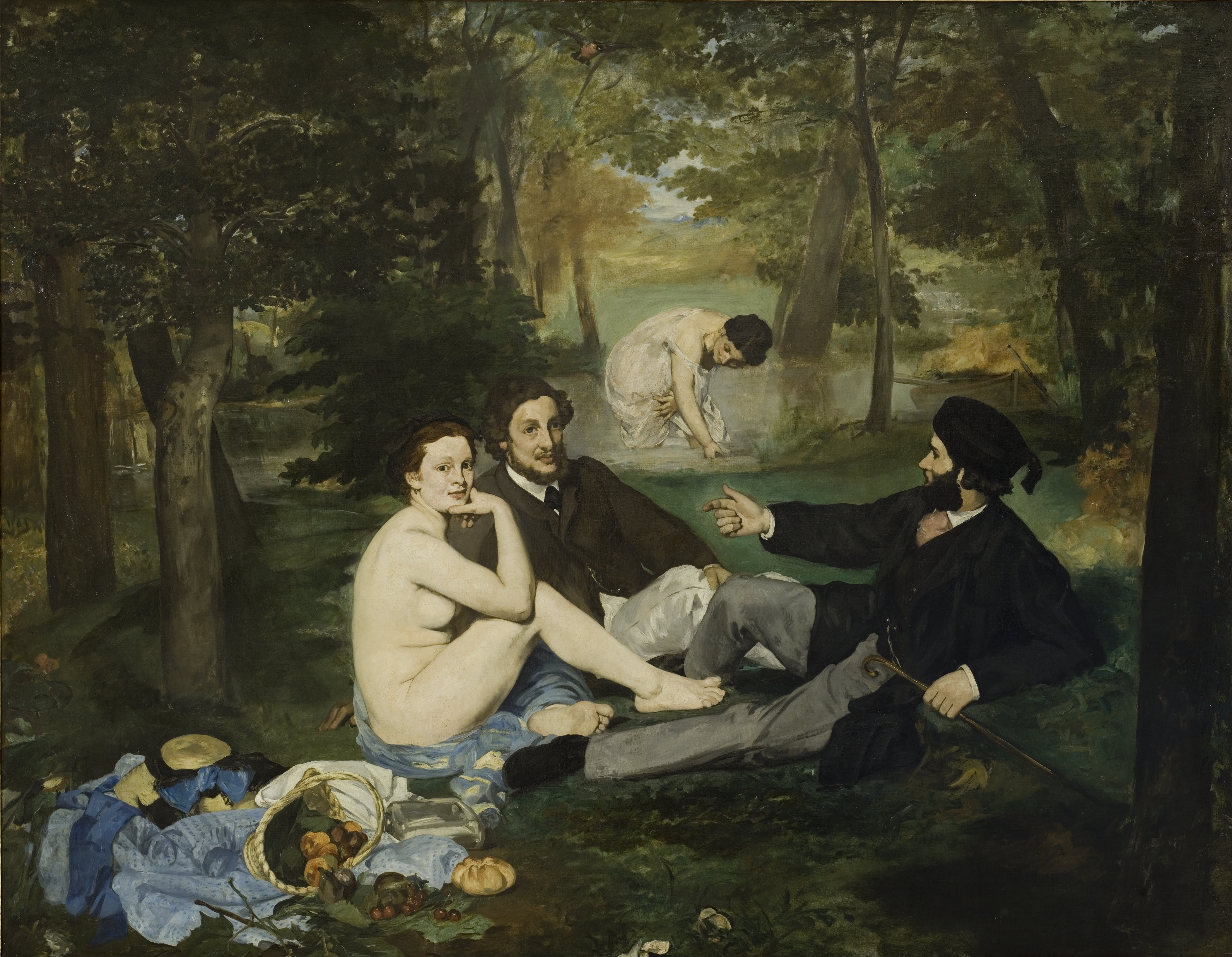
The Luncheon on the Grass, 1863, Édouard Manet © RMN (Musée d'Orsay) / Hervé Lewandowski
The Luncheon in Fur caused a massive sensation at André Breton's first exhibition of surrealist sculpture (Exposition surréaliste d'objets), launching Oppenheim into sudden fame. The furry cup was put on a pedestal and became the talk of the town, but this overnight success wasn’t entirely positive for her. She repeatedly stressed that the piece was just a "youthful joke" with no deeper meaning. Clearly, she didn't want it to define her entire career.
Her struggles within the art world, combined with the rise of the Nazis during World War II, eventually stifled her creativity. It took nearly twenty years before she could return to her art career.
In 1975, at 63 years old, she was invited by the famous curator Harald Szeemann to show a painting she had made when she was just 18: Angel of Death (Würgeengel). The piece was displayed in a major exhibition in Bern, Switzerland, but it was grouped under the theme of the "Femme Fatale."
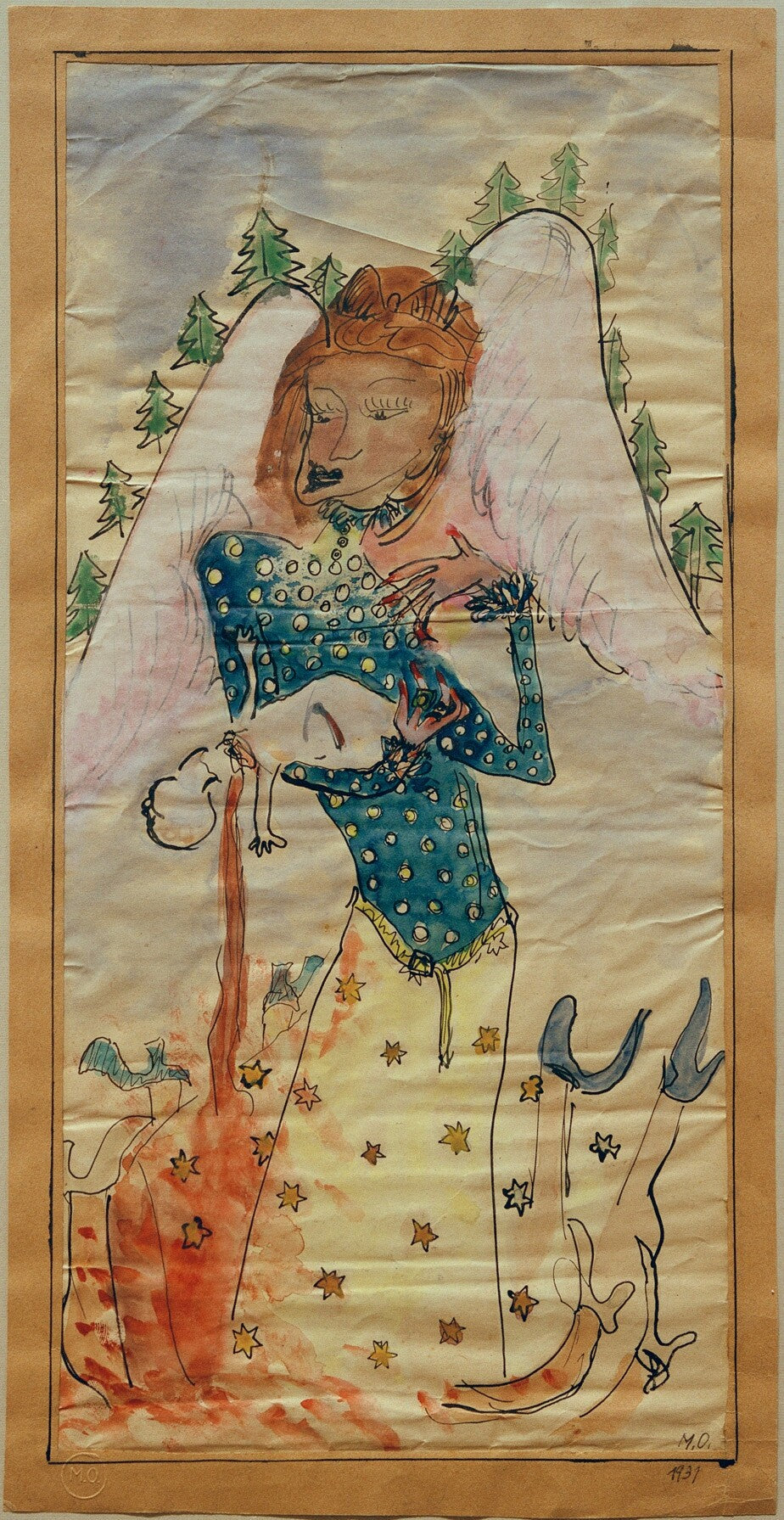
Angel of Death (Würgeengel), 1931, Méret Oppenheim. Tusche, Aquarell, 13 3/8 × 6 7/8 in. Private collection. © 2023 Artists Rights Society (ARS), New York / ProLitteris, Zurich
A "Femme Fatale" typically refers to a dangerous woman who uses her beauty and charm to seduce men and lead them to ruin. To Oppenheim, slapping this label on her work felt like a direct insult.
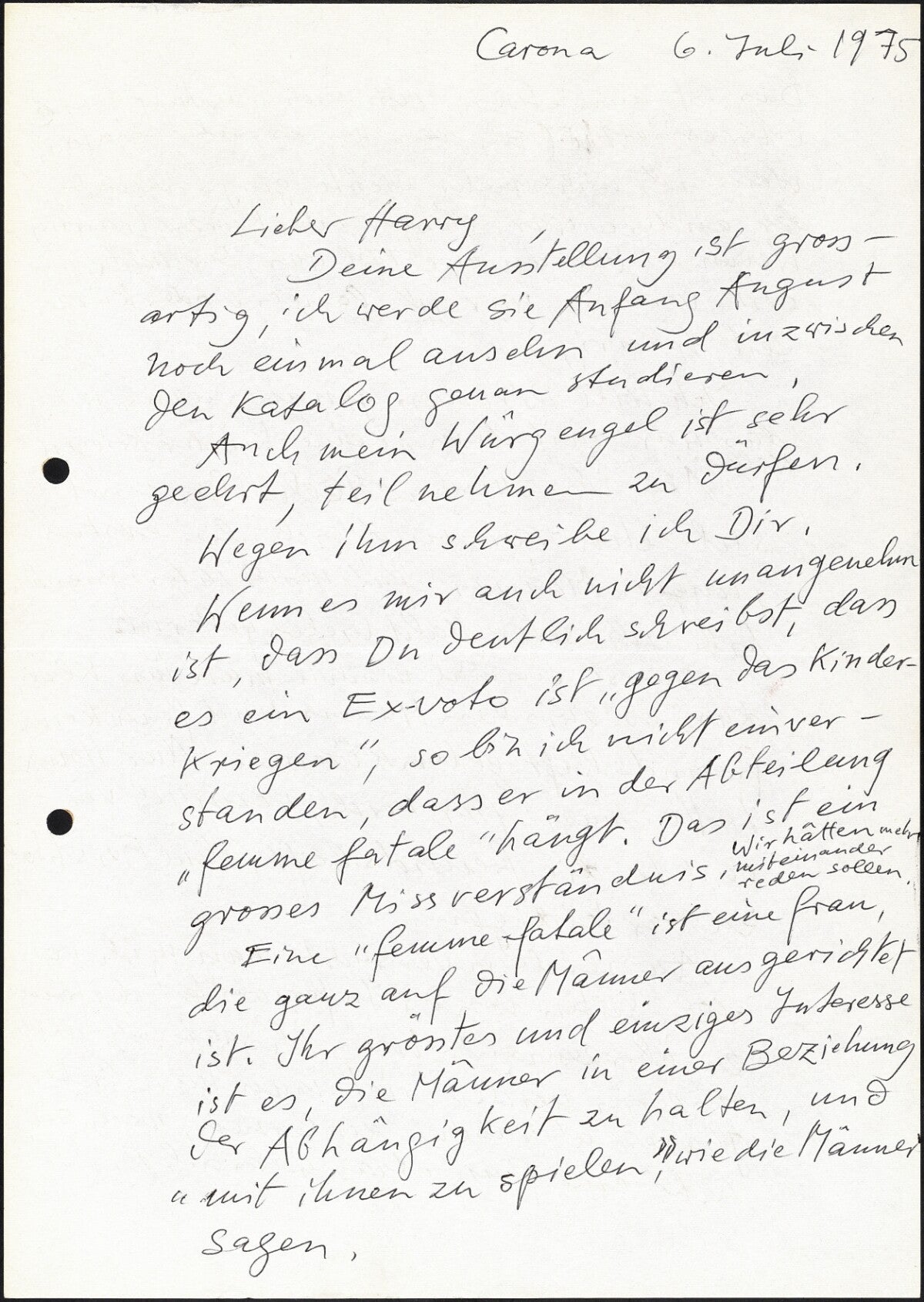
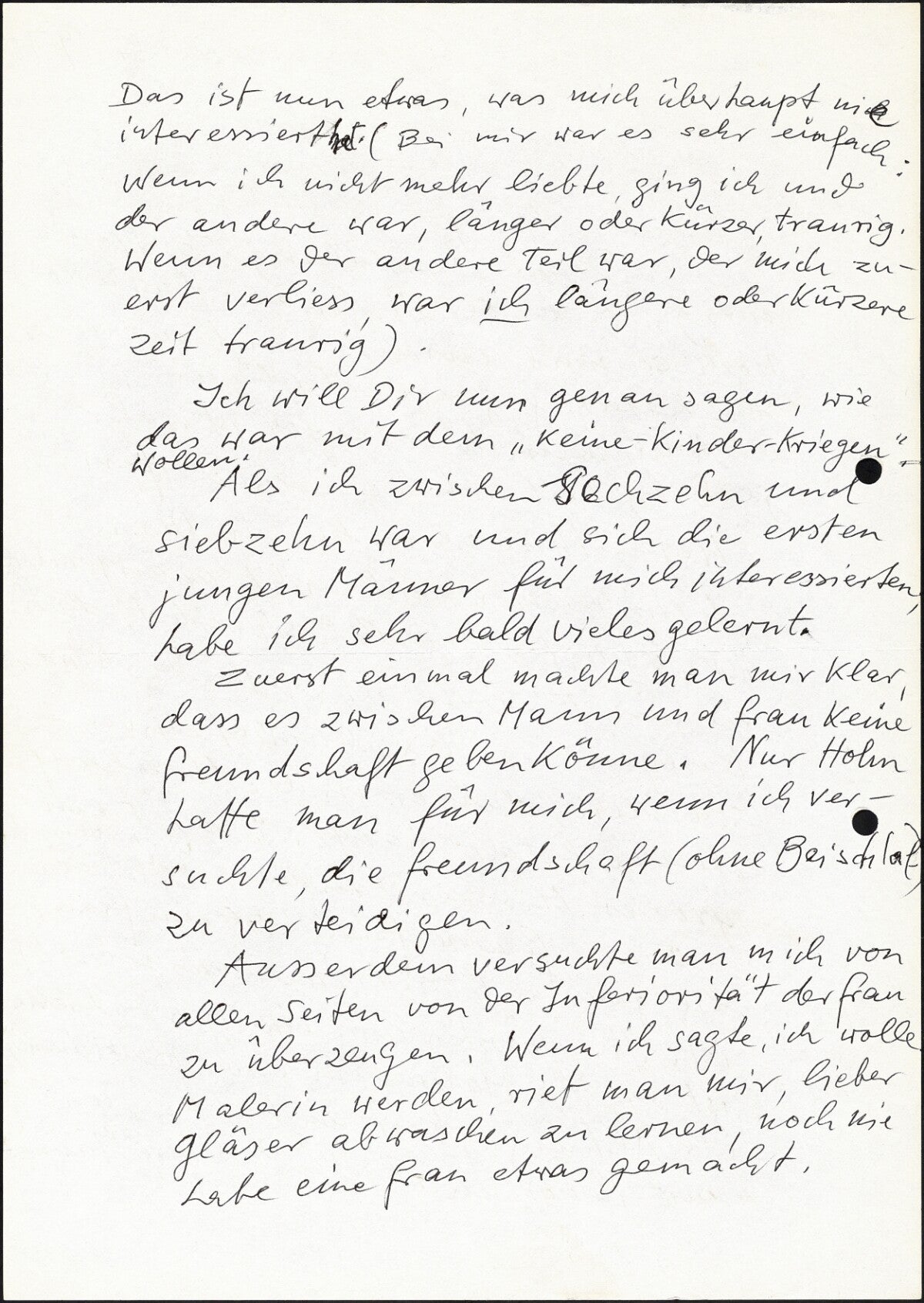
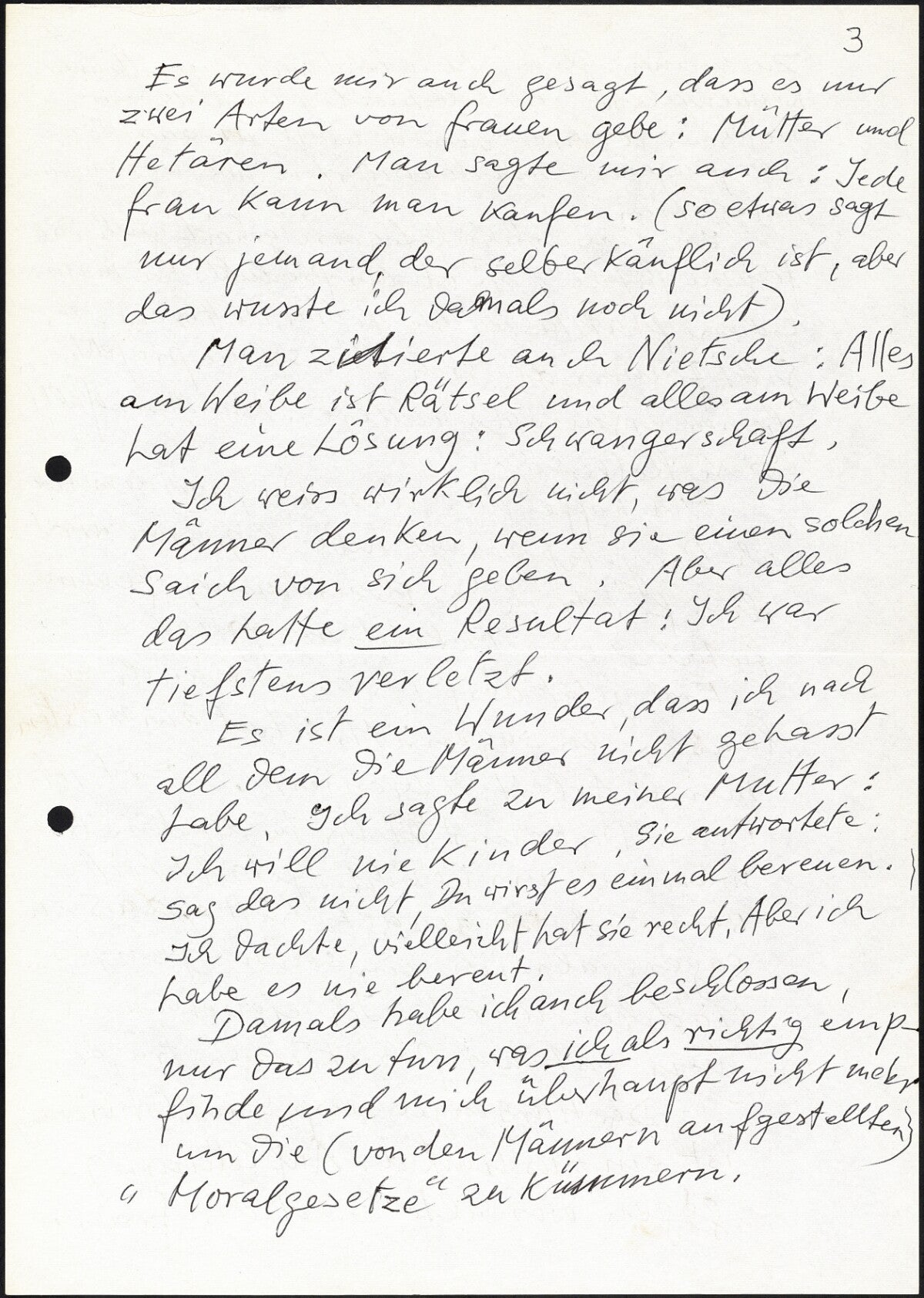
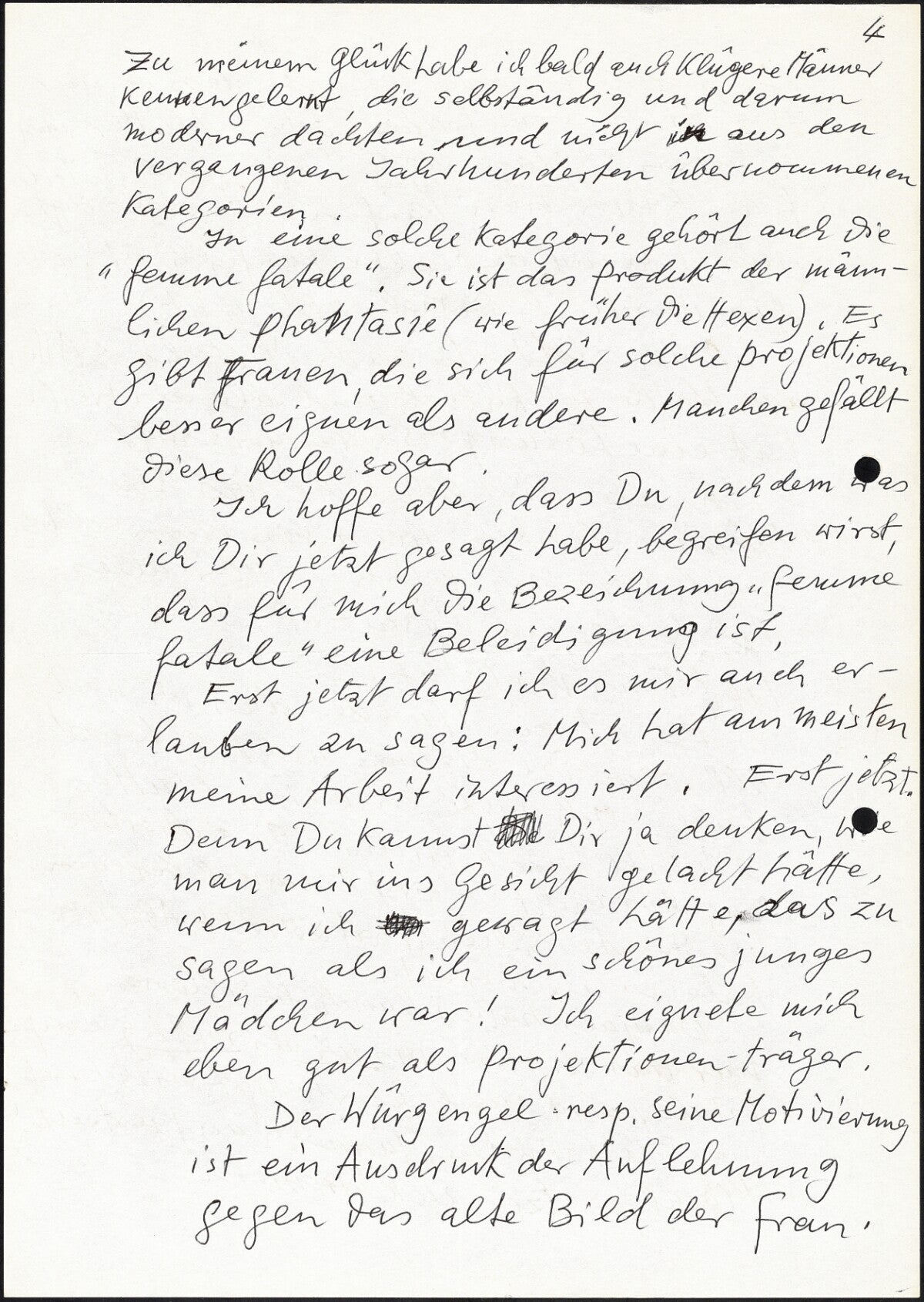
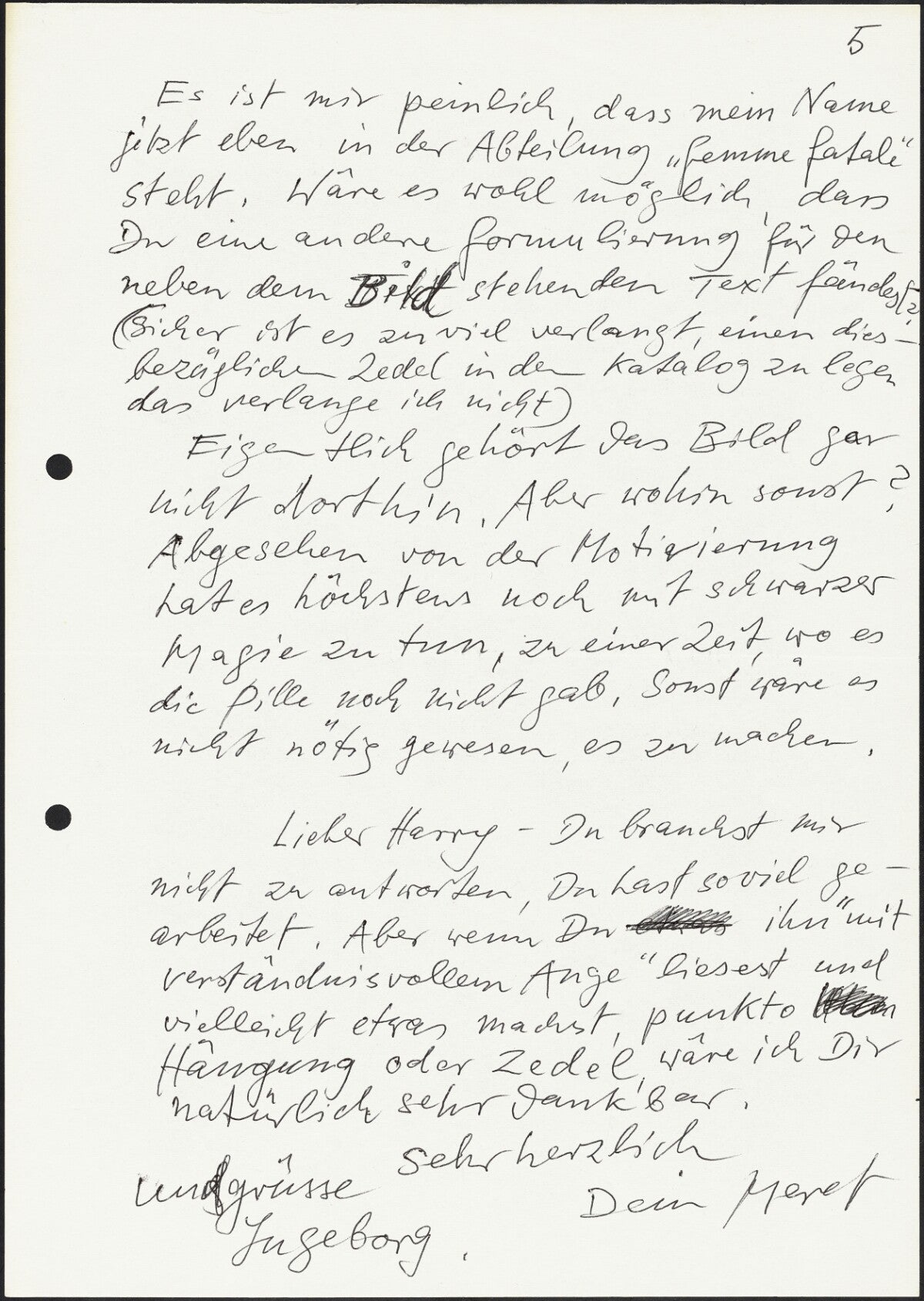
Méret Oppenheim to Harald Szeemann, July 6, 1975, Harald Szeemann papers. Getty Research Institute, Los Angeles (2011.M.30). © 2023 Artists Rights Society (ARS), New York / ProLitteris, Zurich
To defend her creative voice, she wrote a five-page letter to Szeemann. In it, she shared a profound realization from her youth that inspired the drawing—a piece centered on the theme of "rejecting motherhood."
"The Würgeengel, or its motivation, is an expression of rejection of the old image of women."
People had once told her to just learn how to wash the dishes and become a good housewife. But even at 18, Oppenheim was determined to break free from society's expectations and carve out her own artistic path. If a "Femme Fatale" is a woman whose life revolves around manipulating men, then Oppenheim was the exact opposite. As she flatly wrote in her letter, "my work interested me the most."
The title Object is wonderfully neutral. It doesn't need lazy stereotypes tacked onto it just because the artist was a woman. What makes this piece so brilliant is simply how Oppenheim altered the material to completely change how we perceive an object's function.
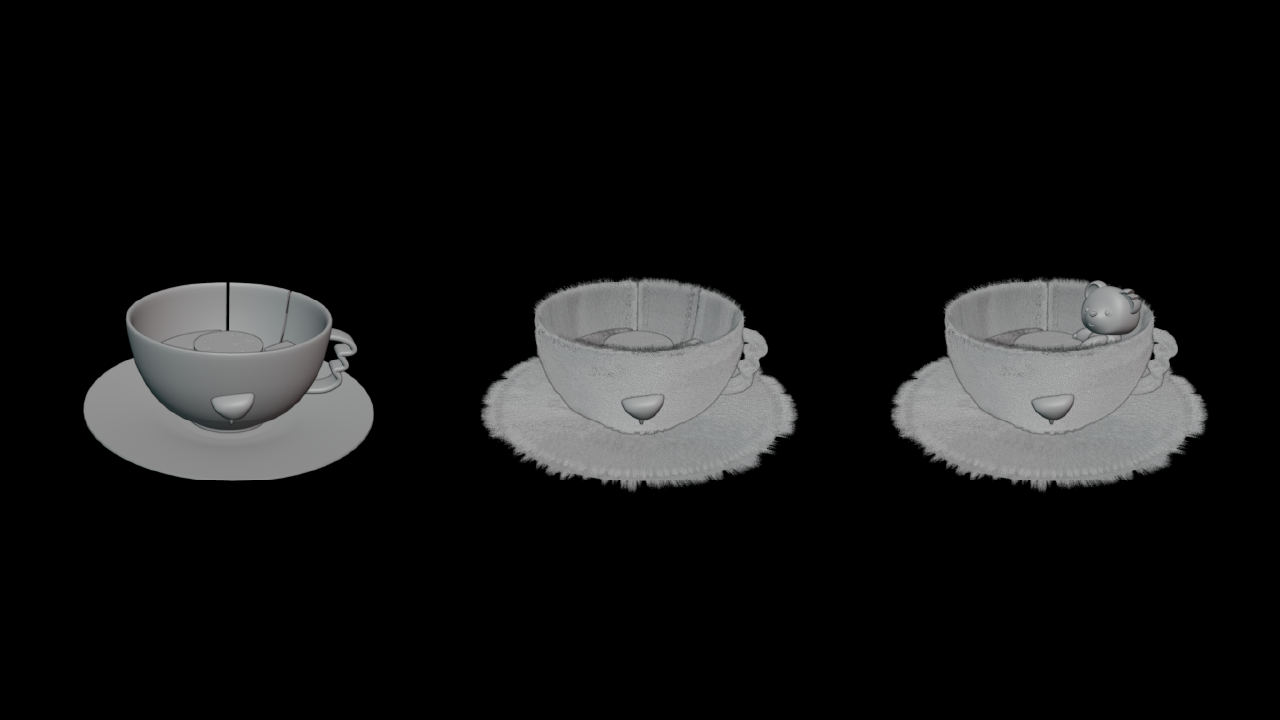
3D Model of the Recreation by CRIIICHI
For this recreation, CRIIICHI turns the furry teacup into an amusement park teacup ride. This allows us to focus entirely on the softness of the material. Instead of provocation, the soft texture brings a sense of warm, grounding comfort.
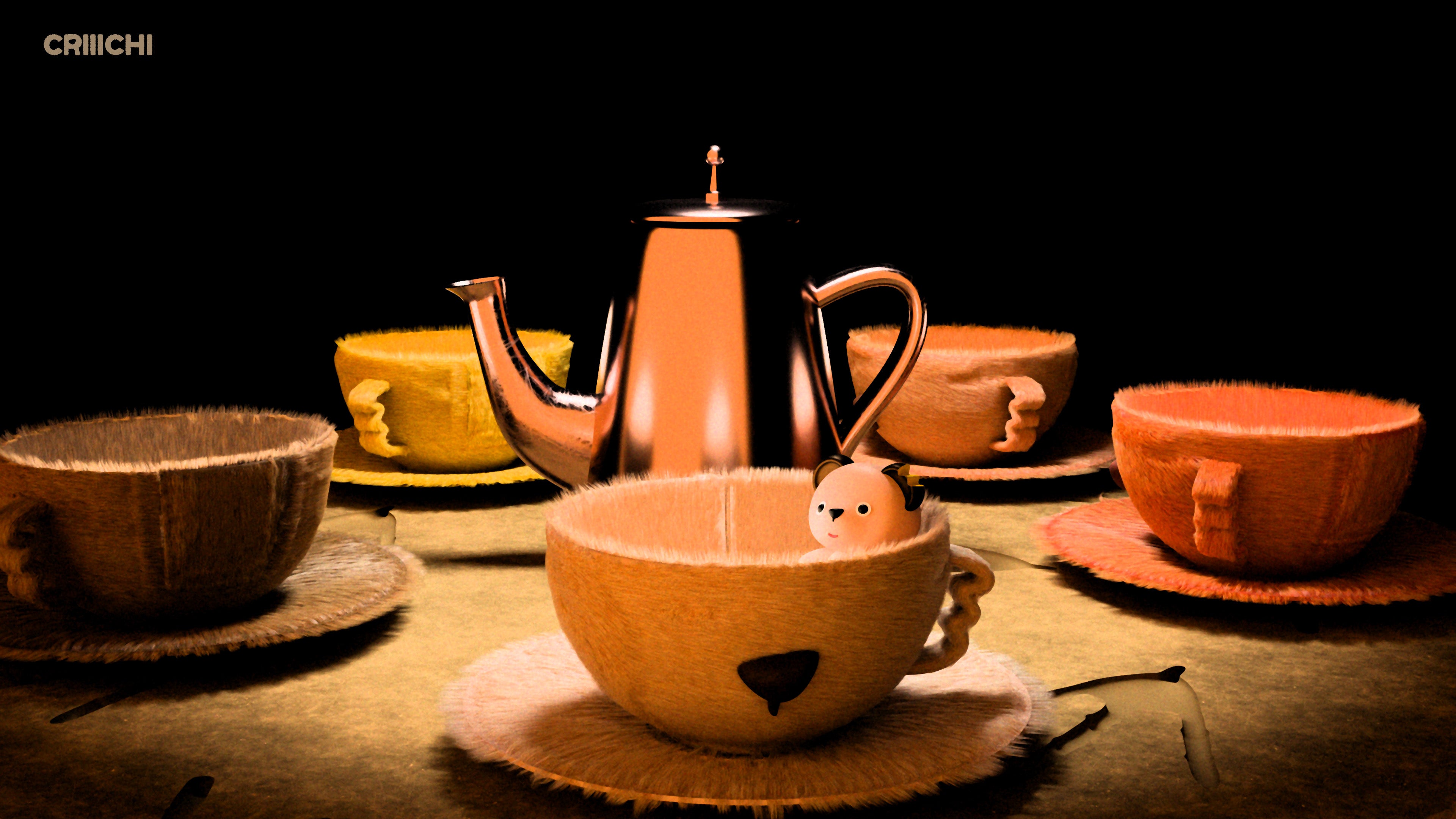
These five teacups are placed on top of another one of Oppenheim's works—Table with Bird’s Feet—spinning gently, each to its own rhythm.
Though the space is completely empty, these plush seats are there to warmly embrace a lonely little CRIIICHI bear.
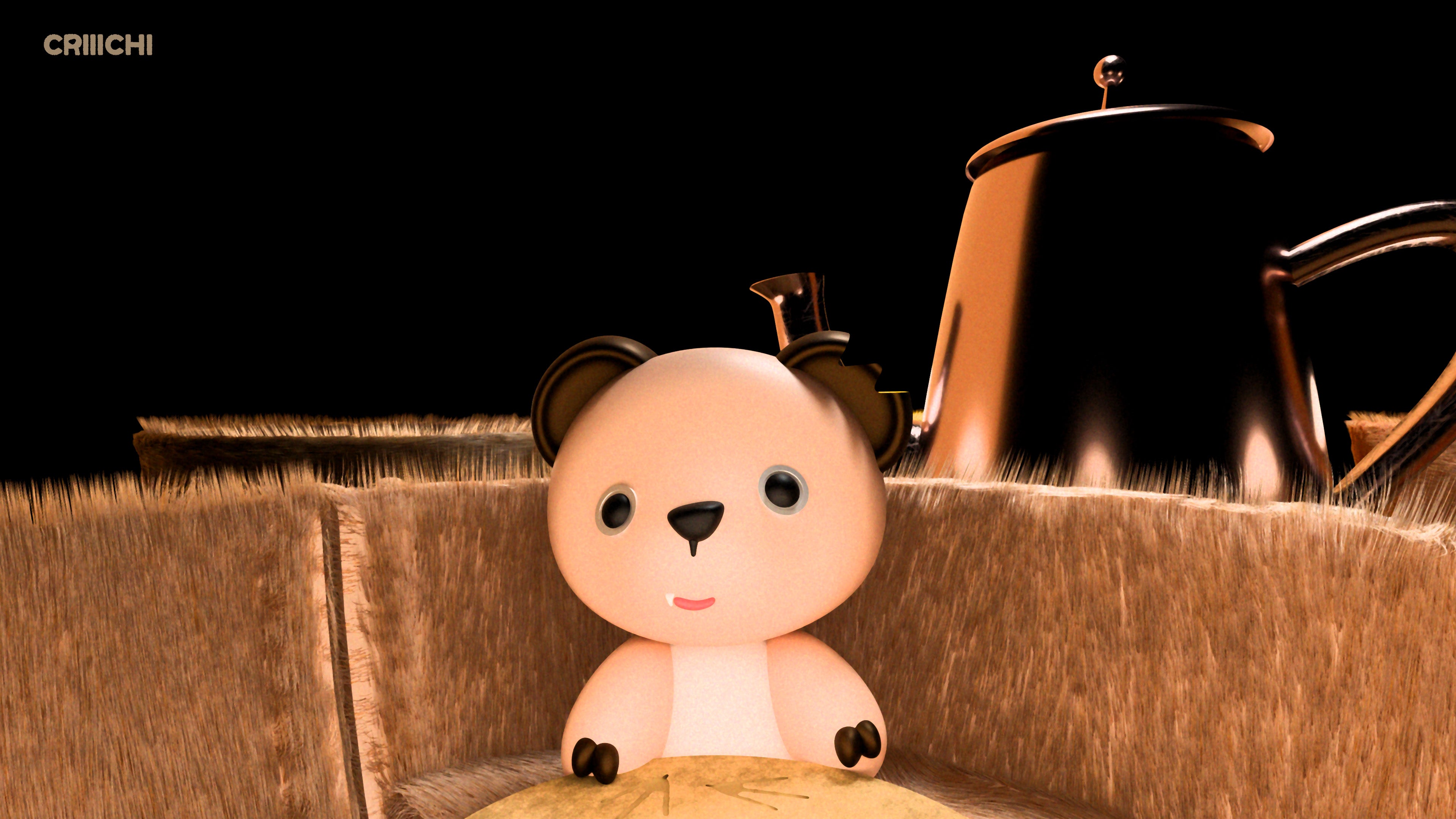
Watch the animation here.
Reading List
-
Museum Archive: MoMA Collection: Object by Méret Oppenheim (1936)
-
Podcast: Intimate Addresses: Meret Oppenheim - Femme Fatale Is an Insult
- Book: Morris, Desmond. The Lives of the Surrealists. (Thames & Hudson).
Image Credits
-
The Museum of Modern Art (MoMA)
-
AP Images
-
The Atlantic
-
ArtNexus
-
Steven Zucker (Smarthistory)